Buy wellnessmassage.eu ?
We are moving the project
wellnessmassage.eu .
Are you interested in purchasing the domain
wellnessmassage.eu ?
domain@kv-gmbh.de · 0541-91531010
Buy wellnessmassage.eu ?
Which verbs can be well represented pantomimically?
Verbs that involve physical actions or movements can be well represented pantomimically. For example, verbs like running, jumping, swimming, and dancing can be effectively conveyed through pantomime. Actions that are easily recognizable and have clear physical gestures are ideal for pantomimic representation. Additionally, verbs that involve emotions or expressions, such as laughing, crying, or shouting, can also be effectively portrayed through pantomime. **
What are irregular verbs and strong verbs?
Irregular verbs are verbs that do not follow the regular pattern of adding -ed to form their past tense and past participle. Instead, they have unique forms for these tenses. Strong verbs are a type of irregular verb that form their past tense and past participle by changing the vowel sound in the base form of the verb. These verbs often have a more complex and unpredictable pattern of inflection compared to regular and weak verbs. **

Similar search terms for Verbs
Top-Angebote
Products related to Verbs:
-
JoyToys Slow Rebound Stress Ball Sensory Fidget Toy For Anxiety Relief & Everyday Relaxation Slow Rebound Stress Ball Sensory Fidget Toy For Anxiety Relief & Everyday RelaxationTake a break from daily stress with a soothing squeeze that helps you reset and refocus. This stress ball is a soft, slowrising sensory fidget toy designed for kids, teens, and adults who enjoy calming tactile stimulation. Its unique waxlike texture...29,97 $*Shipping: 0,00 $Secure redirect to the provider
-
JoyToys OceanCube Stress Ball Slow Rise Sensory Fidget Toy For Anxiety Relief & Relaxation OceanCube Stress Ball Slow Rise Sensory Fidget Toy For Anxiety Relief & RelaxationTake a calming break anytime your day feels overwhelming with the OceanCube stress ball. Designed for kids, teens, and adults, this soothing sensory fidget toy features a beautiful oceaninspired design with floating seashell details that make every...29,97 $*Shipping: 0,00 $Secure redirect to the provider
-
JoyToys Jumbo Banana Squishy Toy Slow Rising Stress Relief Sensory Fidget For Relaxation Jumbo Banana Squishy Toy Slow Rising Stress Relief Sensory Fidget For RelaxationTurn everyday stress into satisfying relaxation with this irresistibly soft banana squishy toy. Designed for teens and adults who enjoy calming sensory play, this oversized slow rising squishy delivers a soothing squeeze that slowly returns to its...29,97 $*Shipping: 0,00 $Secure redirect to the provider
-
JoyToys Butter Feel Stress Ball Sensory Fidget Toy For Anxiety Relief And Relaxation Butter Feel Stress Ball Sensory Fidget Toy For Anxiety Relief And RelaxationExperience instant calm with a uniquely soft, butterlike squeeze that melts away everyday tension. This handmade Stress Ball is designed for students, professionals, and anyone who enjoys satisfying sensory play or needs a quick mental reset. Its...29,97 $*Shipping: 0,00 $Secure redirect to the provider



-
Can you please explain the difference between main verbs, auxiliary verbs, and modal verbs?
Main verbs are the primary verbs in a sentence that express the main action or state of being. Auxiliary verbs, also known as helping verbs, are used alongside main verbs to form different tenses, moods, or voices. Modal verbs are a type of auxiliary verb that express possibility, necessity, ability, or permission. They are used to modify the meaning of the main verb in a sentence. **
-
What are regular verbs in English and irregular verbs?
Regular verbs in English are verbs that follow a predictable pattern when forming their past tense and past participle forms. They simply add "-ed" to the base form of the verb to create the past tense and past participle forms. For example, "walk" becomes "walked" and "play" becomes "played." Irregular verbs, on the other hand, do not follow this pattern and have unique past tense and past participle forms that do not end in "-ed." For example, "go" becomes "went" and "eat" becomes "ate." These irregular forms must be memorized as they do not follow a consistent rule. **
-
Can Italian reflexive verbs be used as modal verbs?
No, Italian reflexive verbs cannot be used as modal verbs. Reflexive verbs in Italian indicate that the subject of the verb is also the recipient of the action. On the other hand, modal verbs in Italian express possibility, necessity, or ability. While both types of verbs are important in Italian grammar, they serve different functions and cannot be used interchangeably. **
-
Are verbs capitalized?
Verbs are not capitalized unless they are at the beginning of a sentence. In regular writing, verbs are typically written in lowercase letters. However, in titles or headings where all major words are capitalized, verbs may be capitalized as well. **


What are verbs?
Verbs are words that express action, occurrence, or state of being. They are an essential part of speech and are used to convey the action or state of the subject in a sentence. Verbs can be in different tenses, such as past, present, or future, and can also be modified to show aspects like continuous or perfect. In English, verbs are conjugated to match the subject and can also be used with auxiliary verbs to form different tenses and moods. **
What is the difference between main verbs, auxiliary verbs, and modal verbs? Can you also give an example?
Main verbs are the primary verbs in a sentence that express the main action or state of being, such as "run," "eat," or "sleep." Auxiliary verbs, also known as helping verbs, are used in conjunction with main verbs to form different tenses, voices, or moods, such as "be," "have," or "do." Modal verbs are a type of auxiliary verb that express possibility, necessity, or ability, such as "can," "could," "must," or "should." For example, in the sentence "She is running," "is" is the auxiliary verb and "running" is the main verb. In the sentence "He can swim," "can" is the modal verb and "swim" is the main verb. **
Top-Angebote
Products related to Verbs:
-
DynamicDeals Slow Rebound Mochi Squishy Toy For Stress Relief And Sensory Relaxation Slow Rebound Mochi Squishy Toy For Stress Relief And Sensory RelaxationTurn restless moments into calming relief with this irresistibly soft stress relief toy designed to soothe your hands and mind. Made with a slowrebound squishy texture, this compact fidget companion is perfect for kids, teens, and adults who need a...31,97 $*Shipping: 0,00 $Secure redirect to the provider
-
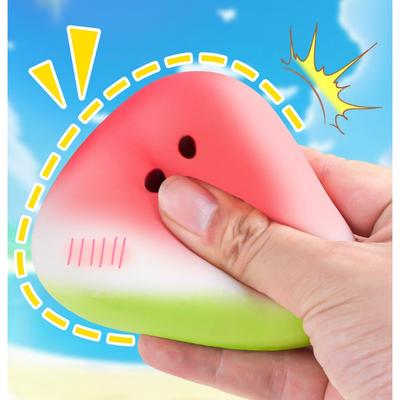
DynamicDeals Watermelon Slow Rising Squishy Stress Relief Toy For Anxiety, Focus & Sensory Relaxation Watermelon Slow Rising Squishy Stress Relief Toy For Anxiety, Focus & Sensory RelaxationTurn stressful moments into satisfying squeezes with this slow rising squishy designed to help you relax, refocus, and unwind. Shaped like a cheerful watermelon slice, this soft sensory toy delivers a calming squeezeandrelease experience for...34,97 $*Shipping: 0,00 $Secure redirect to the provider
-
JoyToys Slow Rebound Stress Ball Sensory Fidget Toy For Anxiety Relief & Everyday Relaxation Slow Rebound Stress Ball Sensory Fidget Toy For Anxiety Relief & Everyday RelaxationTake a break from daily stress with a soothing squeeze that helps you reset and refocus. This stress ball is a soft, slowrising sensory fidget toy designed for kids, teens, and adults who enjoy calming tactile stimulation. Its unique waxlike texture...29,97 $*Shipping: 0,00 $Secure redirect to the provider
-
JoyToys OceanCube Stress Ball Slow Rise Sensory Fidget Toy For Anxiety Relief & Relaxation OceanCube Stress Ball Slow Rise Sensory Fidget Toy For Anxiety Relief & RelaxationTake a calming break anytime your day feels overwhelming with the OceanCube stress ball. Designed for kids, teens, and adults, this soothing sensory fidget toy features a beautiful oceaninspired design with floating seashell details that make every...29,97 $*Shipping: 0,00 $Secure redirect to the provider
-
Which verbs can be well represented pantomimically?
Verbs that involve physical actions or movements can be well represented pantomimically. For example, verbs like running, jumping, swimming, and dancing can be effectively conveyed through pantomime. Actions that are easily recognizable and have clear physical gestures are ideal for pantomimic representation. Additionally, verbs that involve emotions or expressions, such as laughing, crying, or shouting, can also be effectively portrayed through pantomime. **
-
What are irregular verbs and strong verbs?
Irregular verbs are verbs that do not follow the regular pattern of adding -ed to form their past tense and past participle. Instead, they have unique forms for these tenses. Strong verbs are a type of irregular verb that form their past tense and past participle by changing the vowel sound in the base form of the verb. These verbs often have a more complex and unpredictable pattern of inflection compared to regular and weak verbs. **
-
Can you please explain the difference between main verbs, auxiliary verbs, and modal verbs?
Main verbs are the primary verbs in a sentence that express the main action or state of being. Auxiliary verbs, also known as helping verbs, are used alongside main verbs to form different tenses, moods, or voices. Modal verbs are a type of auxiliary verb that express possibility, necessity, ability, or permission. They are used to modify the meaning of the main verb in a sentence. **
-
What are regular verbs in English and irregular verbs?
Regular verbs in English are verbs that follow a predictable pattern when forming their past tense and past participle forms. They simply add "-ed" to the base form of the verb to create the past tense and past participle forms. For example, "walk" becomes "walked" and "play" becomes "played." Irregular verbs, on the other hand, do not follow this pattern and have unique past tense and past participle forms that do not end in "-ed." For example, "go" becomes "went" and "eat" becomes "ate." These irregular forms must be memorized as they do not follow a consistent rule. **
Similar search terms for Verbs
-
JoyToys Jumbo Banana Squishy Toy Slow Rising Stress Relief Sensory Fidget For Relaxation Jumbo Banana Squishy Toy Slow Rising Stress Relief Sensory Fidget For RelaxationTurn everyday stress into satisfying relaxation with this irresistibly soft banana squishy toy. Designed for teens and adults who enjoy calming sensory play, this oversized slow rising squishy delivers a soothing squeeze that slowly returns to its...29,97 $*Shipping: 0,00 $Secure redirect to the provider
-
JoyToys Butter Feel Stress Ball Sensory Fidget Toy For Anxiety Relief And Relaxation Butter Feel Stress Ball Sensory Fidget Toy For Anxiety Relief And RelaxationExperience instant calm with a uniquely soft, butterlike squeeze that melts away everyday tension. This handmade Stress Ball is designed for students, professionals, and anyone who enjoys satisfying sensory play or needs a quick mental reset. Its...29,97 $*Shipping: 0,00 $Secure redirect to the provider
-
JoyToys Big Apple Stress Ball ASMR Fidget Toy For Stress Relief & Sensory Relaxation greenTurn everyday stress into a calming sensory experience with this Apple stress ball that's as fun to squeeze as it is to display. Designed for kids, teens, and adults, this ASMR fidget toy features a soft outer shell with a unique slushlike filling...34,97 $*Shipping: 0,00 $Secure redirect to the provider
-
Inspire Curations CalmPaws Cat Pheromone Diffuser For Stress Relief & Relaxation ukCreate a calmer, more peaceful environment for your feline companion with this cat pheromone diffuser designed to help reduce stressrelated behaviors at home. Ideal for nervous, anxious, or easily overstimulated cats, this calming diffuser releases...120,50 $*Shipping: 0,00 $Secure redirect to the provider
-
Can Italian reflexive verbs be used as modal verbs?
No, Italian reflexive verbs cannot be used as modal verbs. Reflexive verbs in Italian indicate that the subject of the verb is also the recipient of the action. On the other hand, modal verbs in Italian express possibility, necessity, or ability. While both types of verbs are important in Italian grammar, they serve different functions and cannot be used interchangeably. **
-
Are verbs capitalized?
Verbs are not capitalized unless they are at the beginning of a sentence. In regular writing, verbs are typically written in lowercase letters. However, in titles or headings where all major words are capitalized, verbs may be capitalized as well. **
-
What are verbs?
Verbs are words that express action, occurrence, or state of being. They are an essential part of speech and are used to convey the action or state of the subject in a sentence. Verbs can be in different tenses, such as past, present, or future, and can also be modified to show aspects like continuous or perfect. In English, verbs are conjugated to match the subject and can also be used with auxiliary verbs to form different tenses and moods. **
-
What is the difference between main verbs, auxiliary verbs, and modal verbs? Can you also give an example?
Main verbs are the primary verbs in a sentence that express the main action or state of being, such as "run," "eat," or "sleep." Auxiliary verbs, also known as helping verbs, are used in conjunction with main verbs to form different tenses, voices, or moods, such as "be," "have," or "do." Modal verbs are a type of auxiliary verb that express possibility, necessity, or ability, such as "can," "could," "must," or "should." For example, in the sentence "She is running," "is" is the auxiliary verb and "running" is the main verb. In the sentence "He can swim," "can" is the modal verb and "swim" is the main verb. **
* All prices are inclusive of VAT and, if applicable, plus shipping costs. The offer information is based on the details provided by the respective shop and is updated through automated processes. Real-time updates do not occur, so deviations can occur in individual cases. ** Note: Parts of this content were created by AI.